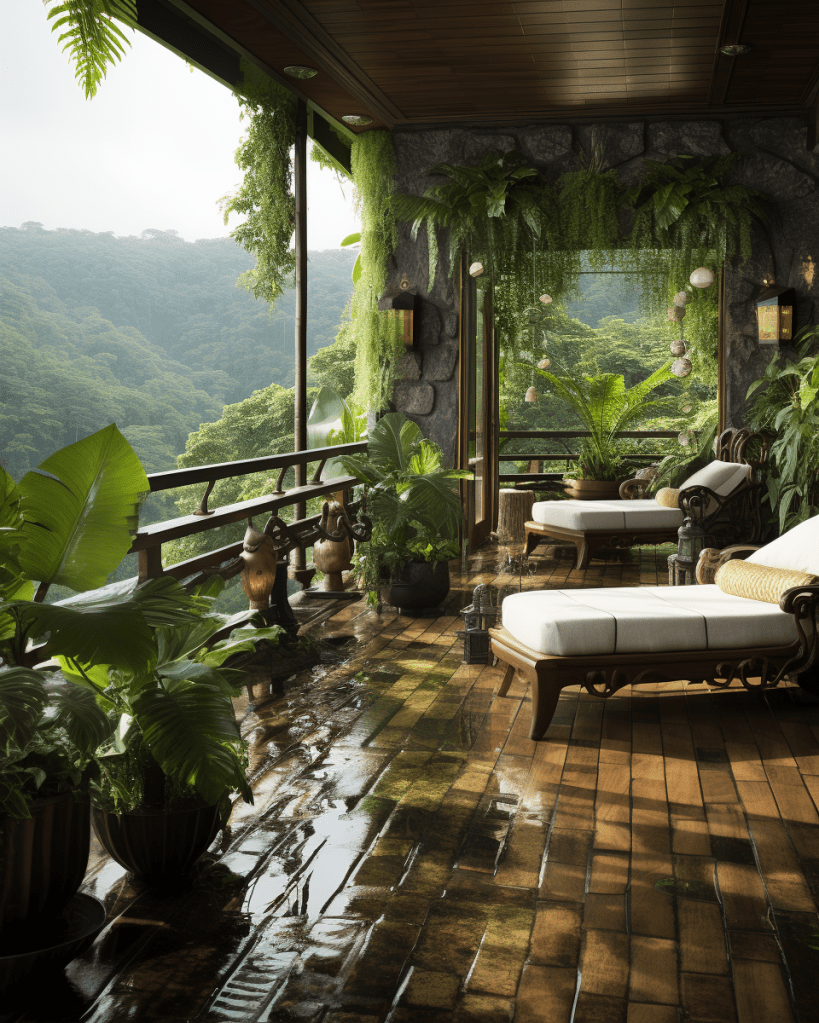
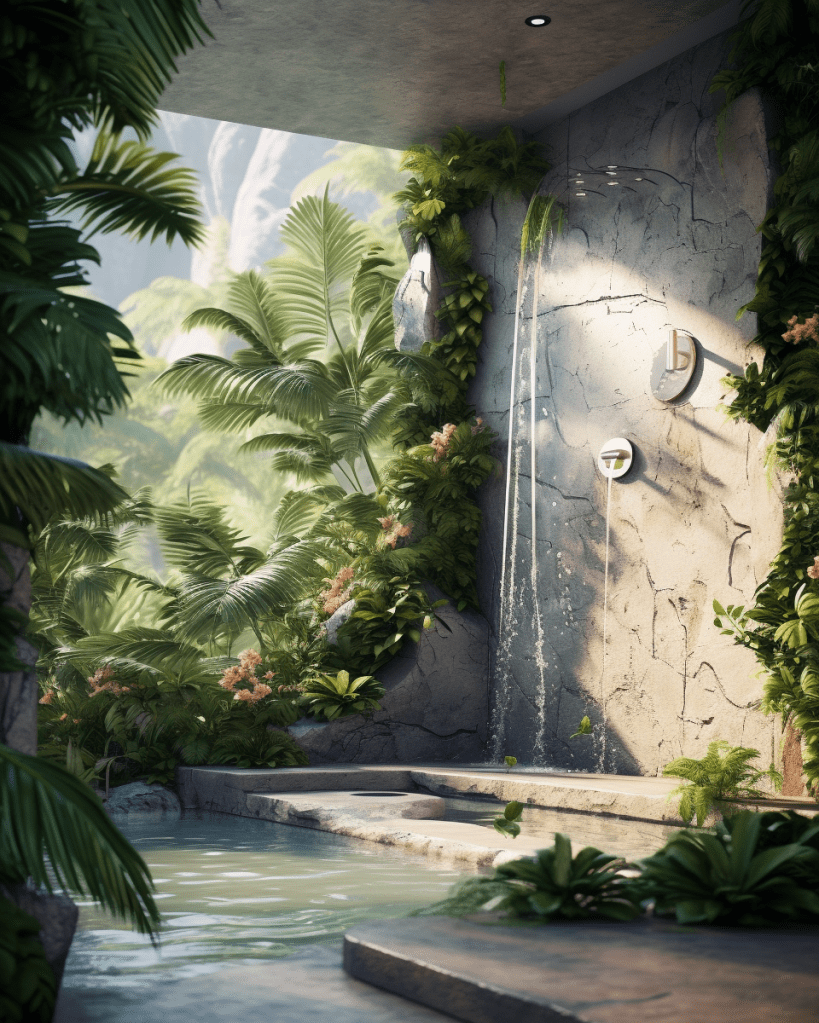
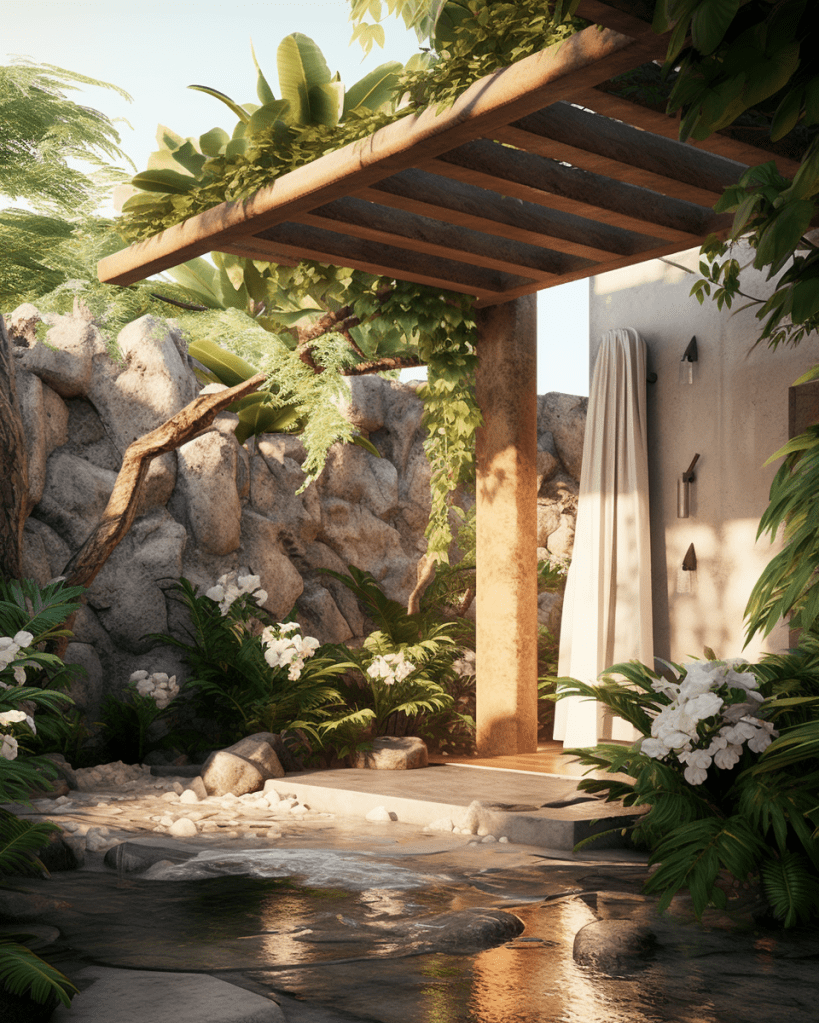
Tropical environments are shaped by climate, light, and constant interaction with nature. Defined by humidity, lush vegetation, and intense daylight, tropical architecture responds through openness, porosity, and fluid boundaries between inside and outside. Rather than enclosure, tropical spaces prioritize ventilation, shade, rhythm, and adaptability, creating environments that are both responsive and sensorial.
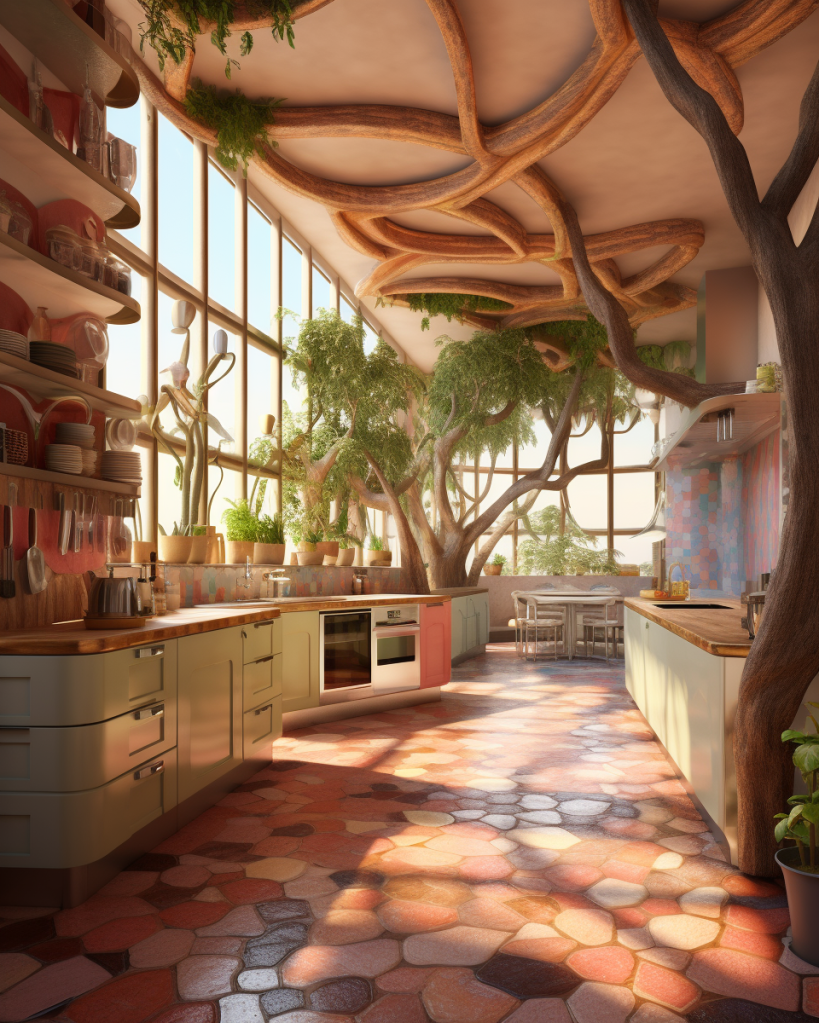
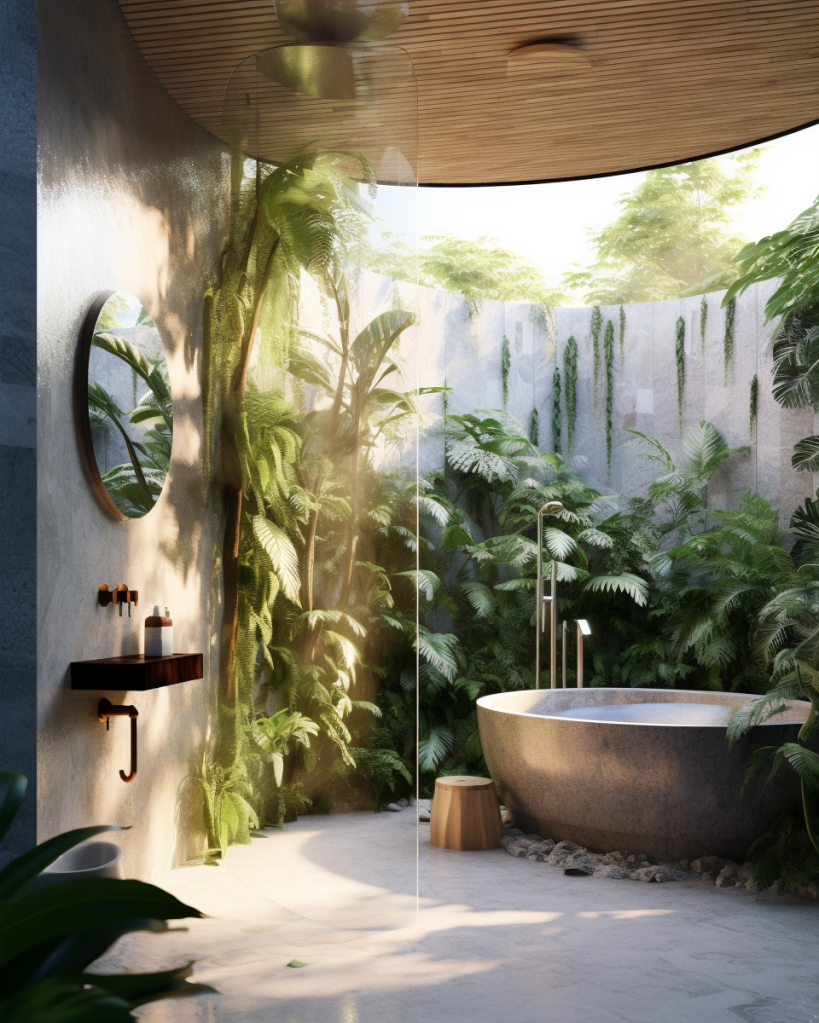
Inspired by these conditions, the spatial explorations study how tropical principles can be translated into atmospheric design. Filtered light, layered screens, natural textures, and spatial permeability are explored as tools to create breathing spaces that feel relaxed yet structured. The studies focus on achieving balance between shelter and openness, allowing space to feel dynamic, climatic, and deeply connected to its surroundings.
 Abeer Fatima